The Lineage of the Marketing Helix
One model. It just kept getting a better name.
The Marketing Helix did not arrive fully formed. It started as a critique of the marketing funnel, became The Gravity Funnel, then FlyByGravity, and finally settled into its current form: The Marketing Helix. The earlier names are kept here as history. The Helix is the current version.
How to read this
Three names, one idea, refined.
Each version below is the same model seen more clearly than the one before it. The Gravity Funnel and FlyByGravity are earlier versions, kept live so the thinking is traceable. The Marketing Helix is the canonical, current model. If you only read one, read the Helix.
The evolution, in order
-
The first reframe of the funnel
The Gravity Funnel
The starting point. It argued the marketing funnel was dead: customers do not march through stages, they move toward brands they trust. Same idea as the Helix, stated for the first time, still in the language of the funnel it replaced.
View the original framework (thegravityfunnel.com) →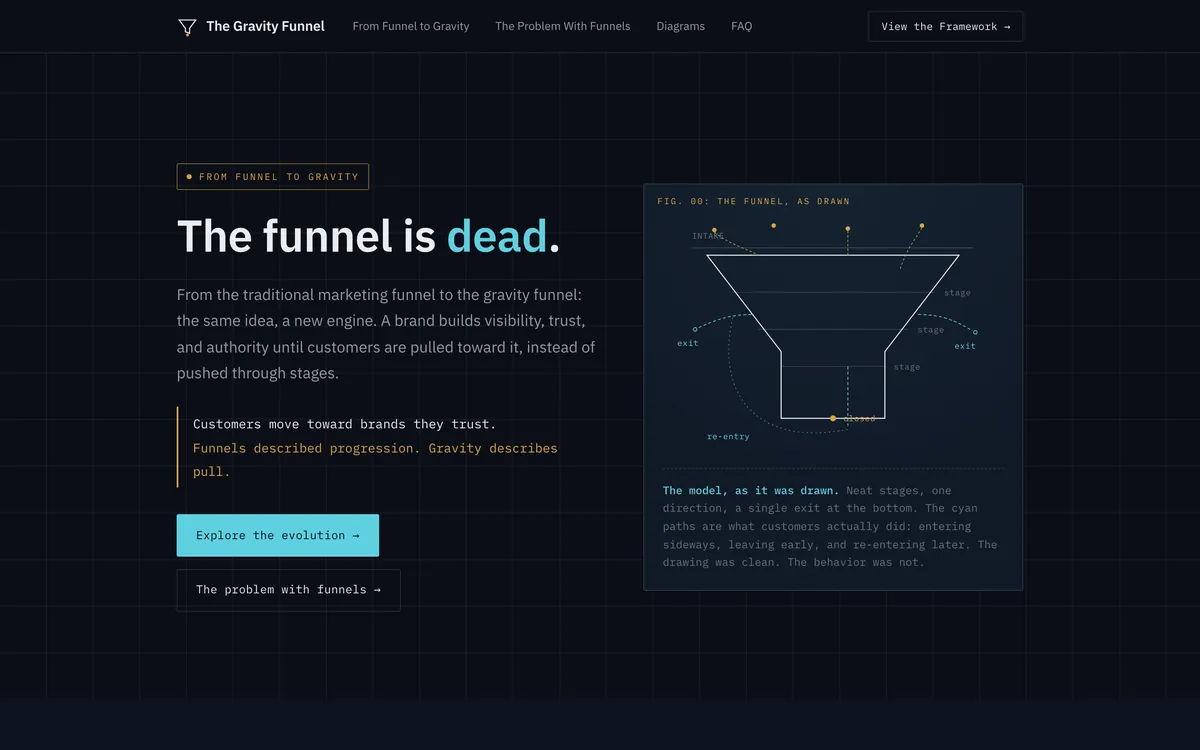
-
The attraction refinement
FlyByGravity
The next version. It dropped the funnel language entirely and described the real mechanism: trusted brands create pull. Customers are drawn in by their own readiness instead of pushed by spend. This attraction idea is now absorbed inside the Helix.
View the earlier framework (flybygravity.com) →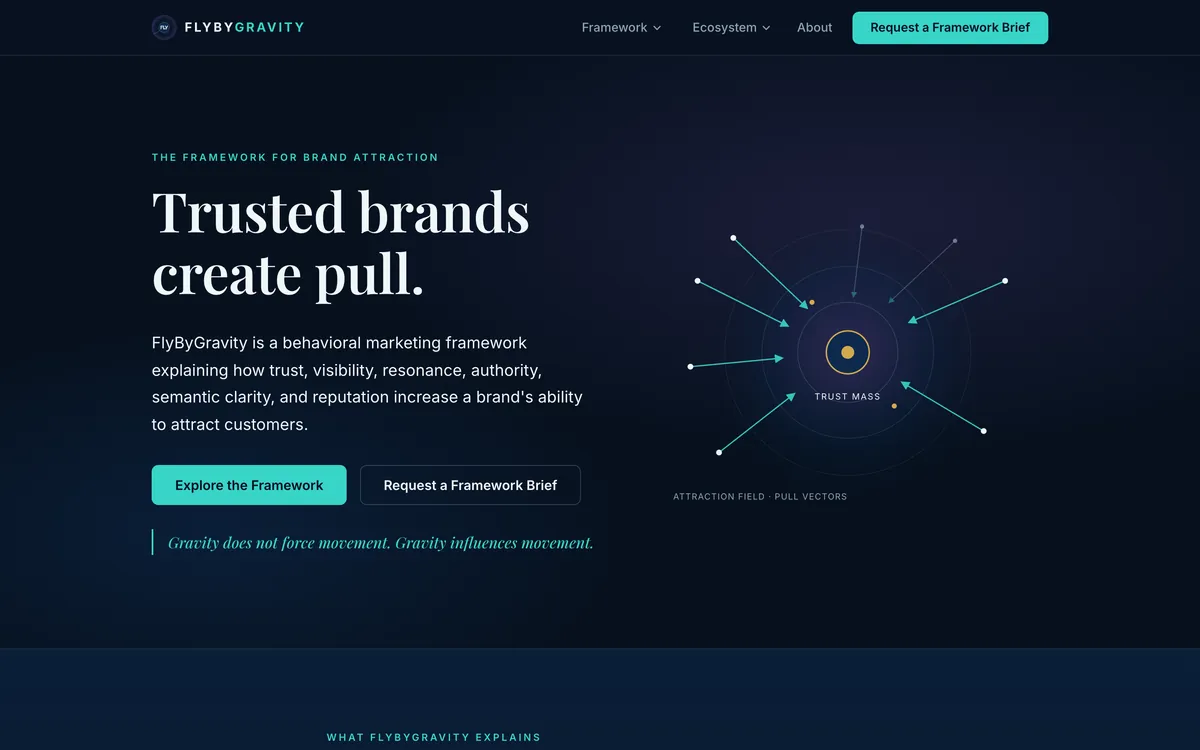
-
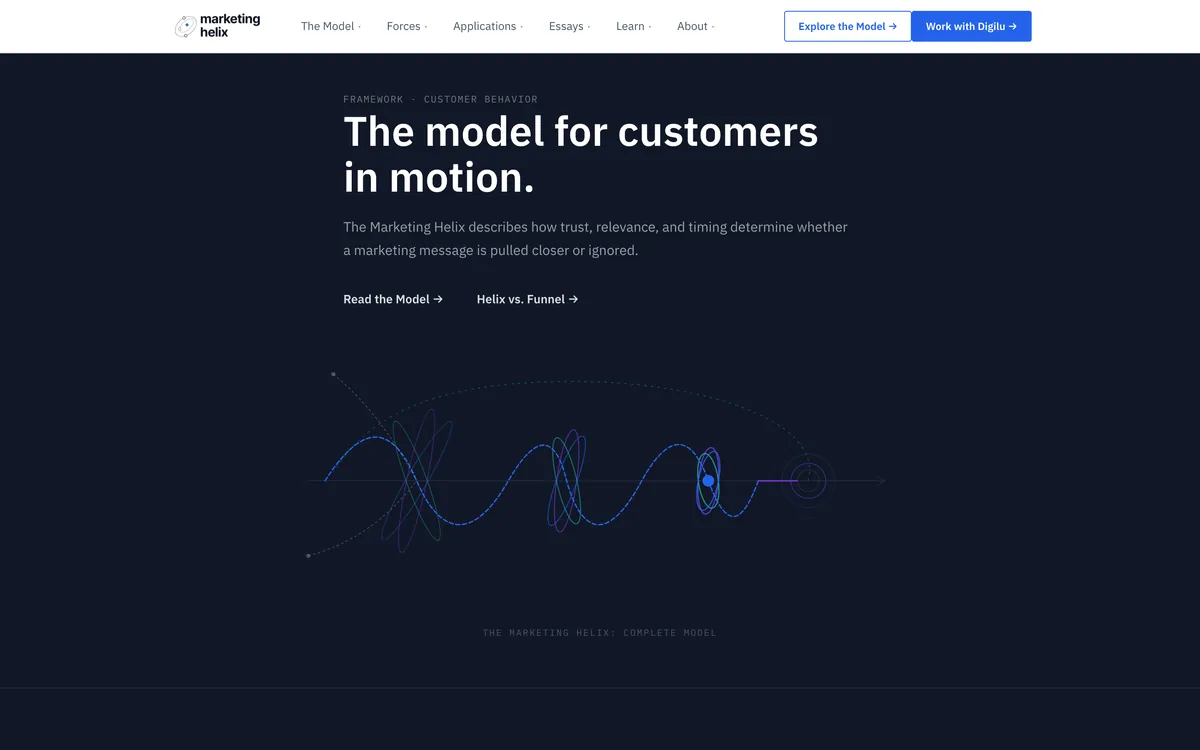
The model for customers in motion
The Marketing Helix
The current, canonical version. It keeps everything the earlier names were reaching for: movement, trust, and pull, in one behavioral model. Trust, relevance, and timing decide whether a marketing signal is pulled into consideration or ignored. This is the one to use.
Explore The Marketing Helix →